Staging Sites – Secure Defaults Before Go-Live
Staging site security is usually treated as an afterthought, yet a staging site often holds a full …

Staging site security is usually treated as an afterthought, yet a staging site often holds a full …

When customers learn about a breach from a journalist, a Reddit thread, or a fraud alert from …

Marketing teams add tracking scripts, legal teams buy a cookie consent banner, and many of those sites …

A scan that knocks your checkout offline at 2 p.m. on a Tuesday does more damage than …

Web cache poisoning happens when an attacker tricks a CDN or reverse proxy into storing a harmful …

XML-RPC in WordPress is one of those features most site owners never use but nearly all of …

A missing X-Content-Type-Options header is one of the most common findings in any web security audit, and …

A developer debugging a failed checkout at 2 a.m. wants as much detail as possible, while an …

Deprecated API versions are one of the most common gaps in web application security, because an endpoint …

Security teams chasing phishing emails and credential-stuffing bots often overlook a quieter class of intrusion: watering hole …

Business logic flaws live in the gap between what an application is supposed to do and what …

Every certificate has an expiration date, and every year a predictable number of outages trace back to …

A site owner runs a vulnerability scan, sees a list of unpatched issues, and asks the obvious …

Every admin panel eventually collects a graveyard of accounts nobody remembers creating – the freelance developer from …

When a website gets compromised, the instinct is to fix it immediately – patch the plugin, delete …

The moment a WordPress site admin notices a suspicious export of the wp_users table, or an ecommerce …

Authenticated scanning is where most vulnerability scanning programs quietly fail – teams run daily scans, see a …

HTTP request smuggling shows up on almost every audit checklist for sites running behind a reverse proxy, …

A stray line in an .htaccess file or a single missing chmod can turn wp-config.php from the …

Every time a browser navigates from your site to another domain, it can hand that destination a …

Server response headers give away far more than most teams realize – a raw Server: Apache/2.4.41 (Ubuntu) …

Mass assignment slips into production because it looks like ordinary Rails, Django, or Spring convenience – bind …

Formjacking attacks the moment a customer trusts your checkout page most – right as they type their …

Race condition vulnerabilities show up whenever a web application checks a condition and acts on it in …

Most web teams find out their incident response plan doesn’t work at the worst possible moment – …

The NIS2 Directive expanded the EU’s cybersecurity rulebook well beyond the critical infrastructure operators who were covered …

Crawling depth determines how many links deep a scanner follows from your homepage before it stops – …
A router admin panel, a Jenkins instance, a Redis cache with no password – these are exactly …

WordPress ships with five default roles – Administrator, Editor, Author, Contributor, and Subscriber – and the gap …

Permissions Policy Header controls which browser features and APIs a website – and any embedded third-party content …

Subresource Integrity is one of those browser features that quietly closes a hole most teams don’t even …

Modern web applications rarely authenticate users with a single login form anymore – most rely on API …

Insecure Direct Object References let one user peek into – or tamper with – another user’s data …

Supply chain attacks through compromised dependencies have become one of the most effective ways for attackers to …

Command injection remains one of the most devastating vulnerability classes in web application security because it hands …

Most security teams discover their website’s actual risk exposure only after something breaks – a defaced page, …

The moment a security scan flags something critical on a production website, the clock starts ticking – …

Security engineers reviewing a vulnerability scan report often pause at two terms that appear almost interchangeably: path …

Automated security scanners promise broad OWASP coverage, but “70% of OWASP categories” is a number worth unpacking …

Headless CMS architectures split content management from presentation, which means the traditional security perimeter of a monolithic …

Server-Side Template Injection, or SSTI, is one of those vulnerability classes that gets far less attention than …

A security scan alert notification lands in your inbox at 2am, and the first instinct for a …

The finance team rarely asks about vulnerability scans, but they absolutely understand return on investment – and …

Every WordPress site lives or dies by its theme, and WordPress theme security is one of the …

A user types a company’s domain into their browser without bothering to add https:// – muscle memory, …

Any web application that lets visitors upload a file – a resume, a profile photo, a product …

Vulnerability scanning and pen testing are two of the most commonly confused terms in web application security …

Security scanning before and after website launches is one of those practices that sounds obvious but rarely …

Session hijacking is one of the most direct ways attackers take over authenticated user accounts in web …

Continuous security scanning is one of the most effective ways to maintain site reliability without adding manual …

PCI DSS – the Payment Card Industry Data Security Standard – is the security framework that governs …

Most web applications today rely heavily on third-party JavaScript libraries – npm packages, CDN-hosted scripts, analytics snippets, …

Broken authentication is one of the most exploited vulnerability classes in web applications, and it consistently appears …

JWT security is one of the most misunderstood areas of web application security, and implementation mistakes in …

Small business web security is often treated as an afterthought – something to deal with “later,” after …

API rate limiting is one of those security controls that teams implement primarily for performance reasons – …

Preventing credential stuffing attacks on your website is one of the more urgent challenges facing development and …

Background security monitoring is the practice of continuously scanning a website for vulnerabilities, malware, and misconfigurations without …

Security headers remain one of the most underutilized defenses in web application security, and in 2025 that …
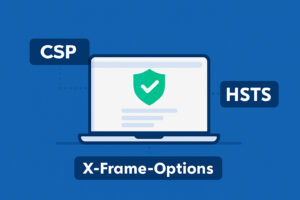
Security headers are one of the most underutilized tools in web application security, yet they can block …

Cookie security flags – HttpOnly, Secure, and SameSite – are among the most straightforward protections a web …

Securing the WordPress admin panel is one of the most critical steps in any WordPress security hardening …

Insecure deserialization vulnerabilities pose a significant threat to web applications that process serialized data without proper validation.

A security scanner’s false positive rate represents the percentage of legitimate code or configurations incorrectly flagged as …

Security testing for single page applications presents unique challenges that traditional web application security scanning often misses.

Website owners and developers face an increasingly complex threat landscape where DDoS attacks can cripple their online …
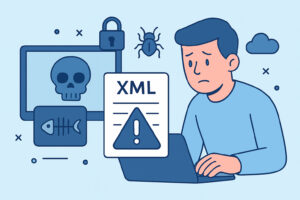
XML External Entity (XXE) attacks represent one of the most dangerous yet overlooked vulnerabilities in web application …

Modern web development moves fast, and security automation has become critical for keeping applications safe without slowing …

Open redirect vulnerabilities represent a critical yet frequently underestimated security risk that can devastate user trust and …

Security teams and developers face a constant challenge: new vulnerabilities emerge daily, yet manual security testing can …

Security misconfigurations represent one of the most critical yet preventable vulnerabilities in web applications today.

WordPress site owners face an escalating threat landscape where WordPress REST API security vulnerabilities represent one of …

CORS misconfiguration represents one of the most overlooked yet critical web application security vulnerabilities that developers encounter …

Development teams often struggle to balance delivering features quickly while maintaining robust website security. Automated security scanning …

Clickjacking attacks represent a persistent threat to web applications, where attackers trick users into clicking on hidden …

Website downtime caused by security attacks represents one of the most expensive yet underestimated risks facing modern …

Modern applications rely heavily on REST APIs to connect services, share data, and power mobile apps, making …

Implementing Content Security Policy (CSP) correctly provides one of the most effective defenses against XSS attacks and …

Email injection attacks represent a significant threat to web applications that handle user-submitted email data, allowing attackers …

The General Data Protection Regulation (GDPR) has transformed how websites handle personal data, but many organizations overlook …

SSL/TLS certificate validation is the cornerstone of secure web communications, yet many developers and security teams struggle …

Modern web applications rely heavily on localStorage to enhance user experience, but localStorage security risks pose serious …

Tab-nabbing represents a sophisticated phishing technique that exploits user trust through browser tab manipulation, allowing attackers to …
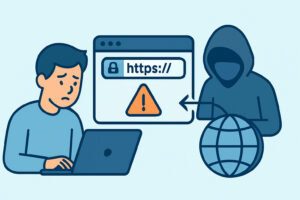
Server-Side Request Forgery (SSRF) attacks represent one of the most underestimated threats in web application security, allowing …

Subdomain takeover represents one of the most overlooked yet dangerous vulnerabilities in modern web application security.

GraphQL APIs are becoming the backbone of modern web applications, but they introduce unique security challenges that …

If you run a website, you might think phishing is something that only happens through email. But …

If you manage a website – whether it’s a business site, an online store, or a SaaS …

If you’re responsible for keeping a website safe – whether it’s a WordPress blog, an e-commerce store, …

If you run a website – whether it’s a business site, an online store, or a WordPress …

Finding malware on your website after Google has already flagged it is like discovering a leak after …

If you run an online store, security scanning for e-commerce isn’t optional — it’s the difference between …

When I first started working with small business websites, I thought security was something only big corporations …

If you’re running a web application and haven’t specifically tested for directory traversal attacks, there’s a real …

If you manage a website, you’ve almost certainly encountered an SSL certificate error at some point — …

If you run a website — whether it’s a small business site, an e-commerce store, or a …

If you run a business website, daily malware scanning is the single most effective habit you can …

Regular security audits are the single most effective way to catch vulnerabilities before attackers do — yet …

If you’re running a WordPress site, you’re running a target. That’s not meant to scare you — …

If you’re responsible for keeping a website or web application secure, you’ve probably faced this question: should …

If you run a website – whether it’s a business site, an online store, or a WordPress …

If you manage a website and you’ve seen a browser warning about “mixed content,” you’re dealing with …

Finding out your website has been compromised is one of the worst feelings you can have as …

If you run a website, there’s a good chance your biggest security risk isn’t some sophisticated zero-day …

If you’re running a WordPress site for your business, you’ve probably come across nulled themes at some …

If you run a website, you have probably wondered at some point whether something shady is going …

If you run a website or manage online services, here’s a question worth sitting with: when was …

You let users upload files to your website. Maybe it is a profile picture, a PDF resume, …

You see that little padlock in your browser’s address bar and feel safe, right?

If you run any kind of online service, you’ve probably seen them in your logs – those …

Getting your first security scan report can feel overwhelming.

If you’re running a website on an outdated content management system, you’re essentially leaving your front door …

When I first started managing websites professionally, I thought DNS was just about making domain names work.

Discovering that your website has been blacklisted is one of those gut-wrenching moments that can happen to …

If you run a website or manage any kind of online service, you’ve probably heard the term …

If you run a WordPress site, you’re probably aware that security matters.
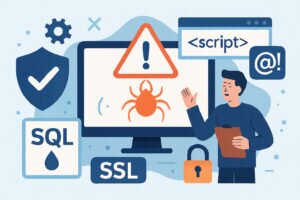
If you run a website or web application, you’re essentially operating a digital storefront that’s open 24/7 …

If you’re running a website, you’ve probably asked yourself this question at least once.

If you run a website or web application, there’s a good chance you’ve heard whispers about XSS …

When you’re running a small website, security often feels like something for the big players.

If you run a website with any kind of database interaction – and let’s be honest, that’s …

Discovering malware on your website feels like finding someone has broken into your home.

You’ve built your website, invested time and money into it, and now it’s running smoothly.

If you run a website, you’ve probably heard about firewalls and security scanners.

If you run a website, you’re a potential target. It doesn’t matter if you’re a small business, …